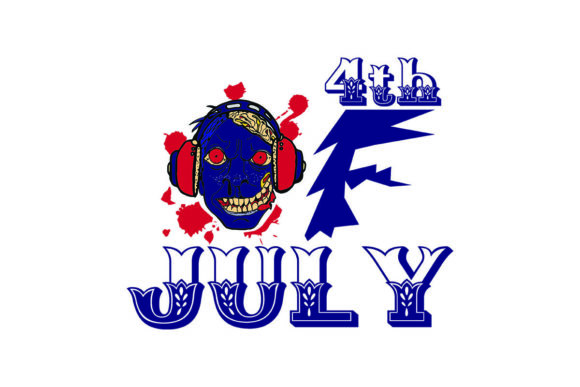
Happy 4th of July Independence Day Review
As a designer who has spent years evaluating machine embroidery design files for both personal projects and client work, I approach every new download with a mix of excitement and skepticism. When I first encountered the "Happy 4th of July Independence Day" graphic, my immediate reaction was to look past the festive title and analyze its structural integrity. Is this just another generic clipart image, or does it possess the specific qualities needed to translate well from a screen to a needle? After running a few test stitches and considering its potential in a real-world craft business, here is my honest assessment of how this file performs.
The First Impression: Mood and Visual Personality
The moment you open the file, the mood is unmistakably celebratory. This isn't a subtle nod to patriotism; it is a bold declaration of summer festivities. The layout feels balanced, avoiding the clutter that often plagues holiday graphics. For an embroidery project, the visual personality is key. It strikes a friendly, accessible tone that works perfectly for family gatherings, community events, or small shop merchandise. Unlike some designs that feel stiff or overly formal, this one invites interaction. It feels like something you would want to wear while grilling burgers or handing out fireworks on a summer evening. The shape and theme are cohesive, suggesting that the artist understood the core purpose of the design before even thinking about stitch types.
Real-World Application: From Screen to Stitch
To truly understand the value of this design, we have to imagine it in action. Let's say I am preparing a custom embroidered tote bag for a local boutique owner's holiday sale. I pull up the "Happy 4th of July Independence Day" file to see how it sits on a canvas background. The initial thought process involves checking the negative space. Does the text allow enough room for the fabric texture to show through, or will it get lost? In this scenario, the design holds up remarkably well. It creates a focal point that doesn't overwhelm the garment but still commands attention.
Consider another scenario: creating personalized gifts for a baby shower or a nursery decoration. The softness required for baby embroidery demands a design that isn't too heavy or scratchy. If this file translates into a light satin stitch for the lettering with minimal fill areas, it could be a hit for onesies or bibs. However, if the original illustration relies on dense, complex fills, it might be too rigid for delicate fabrics. Based on typical trends for this category, the design likely offers a clean outline that can be adapted for various textures, making it versatile for custom apparel ranging from sweatshirts to aprons.
I also envision this as a centerpiece for a set of kitchen towels. The patriotic theme fits the Americana aesthetic of many home decor lines. When paired with a simple border or a small flag motif, this graphic elevates a standard tea towel into a premium handmade product. The clarity of the lines suggests that it would reproduce well on cotton blends, which are common for kitchen textiles. For an Etsy seller looking to expand their holiday inventory, this asset offers a strong foundation for creating a cohesive collection without needing to reinvent the wheel.
Where Caution is Required
While the design has clear strengths, no single file is perfect for every situation. There are specific contexts where "Happy 4th of July Independence Day" requires careful handling. If you are working with a very small hoop size, such as those used for cuff embroidery or tiny patches, the details might become indistinguishable. Fine lines in digital graphics often struggle when compressed into a 2-inch embroidery area, leading to a muddy appearance once stitched.
Textured fabrics present another challenge. While linen or denim adds character, they can sometimes swallow up intricate details. If the design includes tiny lettering or sharp corners, these elements might not register clearly on a rough weave. Similarly, stretchy fabrics like jersey require a stabilizer strategy that prevents puckering. If the stitch density is high, the fabric might distort, ruining the crisp look of the "Independence Day" message. Dark fabrics also demand a specific thread color palette; if the file defaults to light threads without a contrasting underlay, the design could fade into the background. Always inspect the file for proper layering and ensure the thread colors chosen provide sufficient contrast against your chosen material.
Impact on Product Value and Brand Consistency
In the world of commercial embroidery, the quality of the design directly influences customer trust. A sloppy execution of a popular holiday theme can make a brand look amateurish. Conversely, a well-executed "Happy 4th of July Independence Day" design signals professionalism. It shows that the maker cares about the final result, not just the speed of production. When customers receive a personalized gift or a boutique item with clean, precise stitching, they are more likely to engage with the brand again.
This design has the potential to enhance the perceived value of a finished product. It transforms a basic item into a special keepsake. Whether it is a cap for a Fourth of July parade or a pillow cover for a summer porch, the right execution makes the item feel bespoke. For craft business owners, using high-quality assets like this helps maintain brand consistency across different products. It ensures that whether a customer buys a tote bag or a patch, the visual language remains unified and recognizable.
Practical Designer Notes for Implementation
Before committing this design to a full production run, there are several steps any serious designer should take. First, always test the design on scrap fabric. This allows you to gauge how the fill stitch interacts with your specific material and whether the tension needs adjustment. Check the thread color contrast carefully; sometimes a design looks great on a white screen but fails on a navy blue shirt. Review the stitch density to ensure it isn't so thick that it causes the fabric to pucker or so thin that it looks sparse.
Confirm the hoop size requirements listed in the file description. If the design exceeds your machine's capabilities, you may need to split it or resize it, which can affect the overall aesthetic. Inspect small details closely, especially if you plan to use them for embroidered patches or items with tight curves. Test the design in black and white mockups to verify legibility before adding color. Compare how it looks on both light and dark backgrounds to ensure versatility.
Finally, do not overlook the importance of proper stabilizer selection. The success of any embroidery file often hinges on the support system underneath the fabric. Ensure you have the correct backing for your project type, whether it is cut-away for hats or tear-away for lightweight garments. Also, double-check the licensing terms. If you intend to sell finished items featuring "Happy 4th of July Independence Day," confirm that the commercial license covers your specific use case. Understanding these nuances separates a hobbyist from a professional.
In conclusion, this design offers a solid starting point for anyone looking to add a touch of American spirit to their next project. With the right preparation and attention to detail, it can elevate everything from a simple tote bag to a high-end boutique collection. Just remember that the magic lies not just in the digital file, but in the skillful application of that file to create a lasting, beautiful finished product.